

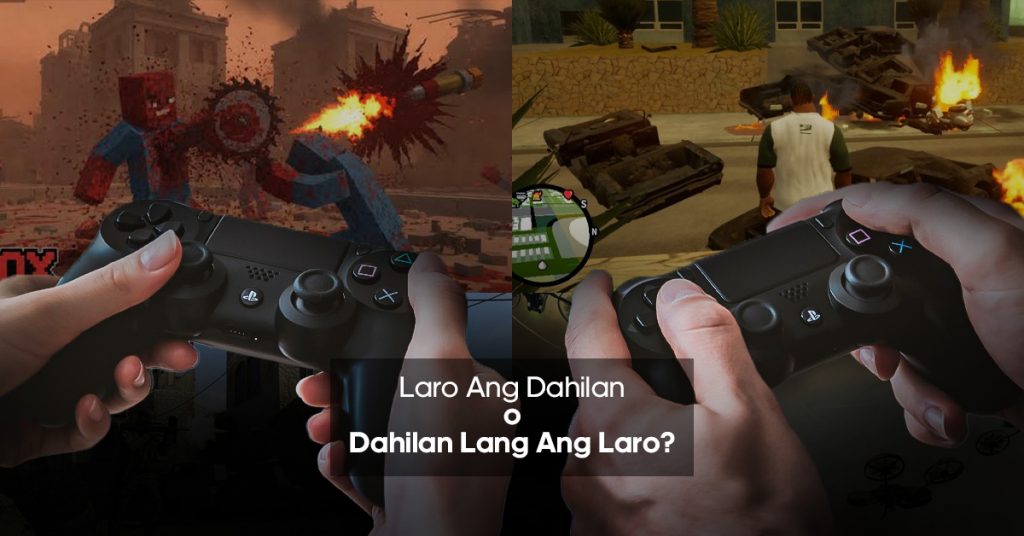
Before anything else, this article is about a tragedy.
Three students lost their lives. Many others sustained injuries. Families, classmates, teachers, and an entire community are now living with the consequences of something that should never have happened in the first place.
Authorities have since taken two minors into police custody in connection with what investigators have described as a premeditated attack. The legal process is underway and those responsible should be held accountable for what happened.
Soon after reports emerged that one of the suspects allegedly played *GoreBox*, another familiar discussion followed. Social media debates erupted, people began questioning whether violent video games influence real-world violence, and conversations quickly expanded towards calls for restrictions, bans, and even discussions about limiting minors’ access to online platforms altogether.
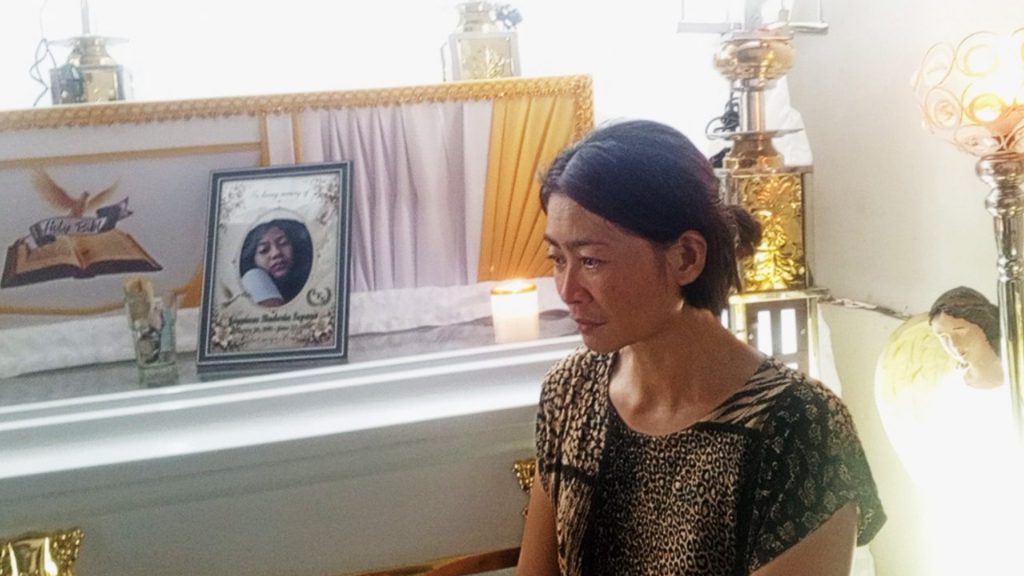 Mother of Joyancee Badoria Separa, 15. (Photo: Rappler)
Amid the growing scrutiny surrounding the game, GoreBox creator Felix Filip released a statement expressing his condolences to the victims, their families, and the San Jose National High School community. He reiterated that GoreBox is intended for adult audiences, is distributed through Steam and Google Play under their existing age-rating and parental control systems, and includes recurring reminders within the game stating that it is fictional entertainment and does not encourage or glorify real-world violence.
Filip also emphasized that no developer can realistically verify the age of every person who downloads a game, which is precisely why age-gates, parental controls, and supervision exist. More recently, he declined an invitation to appear before a Senate hearing, citing his residence in Germany and explaining that he would rather engage with Philippine authorities through proper channels. He maintained that he intends to cooperate fully with the investigation, but believes it should be allowed to run its course before conclusions are drawn.
If you’re a gamer, chances are you’ve encountered this conversation before.
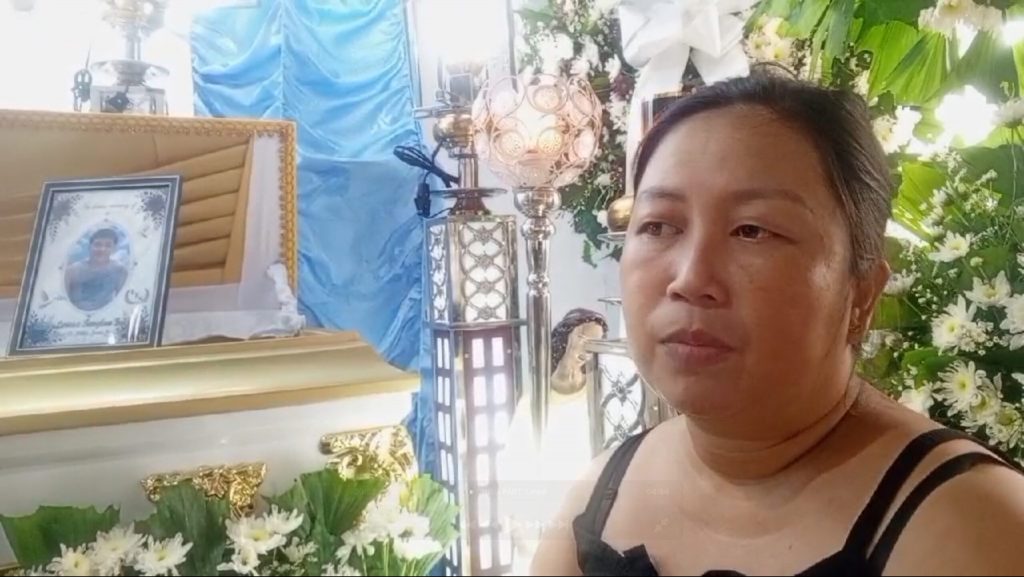 Mother of Chris Lorenz Fabian, 15. (Photo: Rappler)
Whenever a violent crime captures public attention, people naturally look for an explanation. They ask what kind of media the suspect consumed, what communities they spent time in, what content influenced them, and eventually, what games they played. Looking for answers is understandable. After tragedies like these, people want to know why. People want to understand how something so devastating could happen.
But these questions eventually lead us to another one: why do conversations about violence so often end with video games?
Is it because games are the biggest factor, or is it because they’re among the easiest factors to identify and discuss?
Researchers have spent decades trying to answer whether violent games influence behavior, and even today, there isn’t a simple answer that satisfies everyone.
Some studies have suggested that violent games may increase aggressive thoughts, reduce empathy, or slightly affect prosocial behavior under certain circumstances. Other studies have found little to no evidence linking violent video games to serious criminal violence, while a five-year longitudinal study observed no direct relationship between violent game exposure and long-term externalizing behavior, finding only a small indirect relationship through other psychological factors.
The important thing to understand here is that researchers themselves rarely describe violence as a single-cause issue. Human behavior is complicated, and people do not develop inside controlled environments. Family dynamics, school experiences, social circles, mental health, personality, online communities, and media consumption all interact with one another in ways that are difficult to isolate.
This is also where conversations about video games often become polarized. One side argues that games are harmless entertainment and have no meaningful impact on people whatsoever. The other believes violent games directly contribute to violent acts. The reality appears to sit somewhere in the middle.
Media influences people. That much is difficult to dispute. Movies influence people. Music influences people. Social media influences people. Games do as well. But influence alone does not necessarily explain why a person commits an act of violence, especially when millions of people engage with violent media every day without ever harming another person.
If games alone created violent individuals, then we would expect violence to be far more common among the millions of people who spend hundreds or even thousands of hours playing Call of Duty, Grand Theft Auto, DOOM, or GoreBox. Yet most players grow up, go to school, go to work, spend time with friends, and lead perfectly ordinary lives.
This does not remove games from the discussion, but it does suggest that the discussion may be larger than games themselves.
Perhaps the more difficult questions are the ones that don’t immediately fit into headlines.
How did minors gain access to content intended for adults?
Were age recommendations being observed?
Were parents or guardians aware of the kind of media being consumed?
What other online spaces were these minors participating in?
What communities influenced them?
What conversations were happening around them?
 Mother of Ayessa Nicole Dazo, 14. (Photo: SunStar Philippines)
Games are one form of media. Children today consume dozens.
From YouTube and TikTok to livestreams, Discord servers, online personalities, movies, and social platforms, young people are exposed to a constant flow of information, ideas, communities, and content every single day. Games do not exist in isolation, and neither do children.
Parents also play an important role in this conversation. Age recommendations exist for a reason. They are meant to serve as guidance for guardians and families navigating an increasingly digital world where access to content has never been easier. While no rating system is perfect, it raises an important point: understanding what children consume online matters just as much as understanding who they spend time with offline.
The conversation should not stop at the controller.
Following the incident, GoreBox developer Felix Filip publicly expressed his condolences to the victims and their families. He acknowledged the tragedy, reiterated that GoreBox was intended for mature audiences, and stated that he is willing to cooperate with authorities if necessary.
His statement does not settle the debate, nor does it answer every question surrounding media influence. What it does remind us of is that depicting violence and encouraging violence are not always the same thing. Literature depicts violence. Films depict violence. Television depicts violence. Video games do too. Discussions about where creative expression ends and responsibility begins have existed long before video games became mainstream entertainment, and they will likely continue long after this moment passes.
Recently, conversations have also expanded toward proposals to ban minors from social media entirely. Protecting young people online is an understandable goal, and many concerns surrounding online safety are valid. At the same time, it is worth asking whether discussions around bans alone are enough to address the deeper issues that researchers, educators, parents, and communities have been trying to understand for years.
Would some of those same efforts be better directed toward digital literacy initiatives? More accessible mental health support? Better school intervention systems? Stronger guidance for parents navigating online spaces? More effective implementation of age restrictions that already exist?
These questions do not have easy answers, but perhaps that is precisely the point.
Violence has never been a conversation about one thing.
It involves families, schools, communities, relationships, mental health, social environments, and increasingly, digital spaces. Video games deserve to be part of that conversation, but they were never meant to carry the entire weight of it alone.
If there is anything worth taking away from tragedies like this, it is that understanding people requires more than finding the nearest explanation and assigning blame to it. It requires us to look at the bigger picture, even when that picture is uncomfortable, complicated, and difficult to talk about.
Because preventing future tragedies will likely demand more than a ban, more than a headline, and more than a single answer. It requires better conversations, better support systems, and a collective willingness to pay attention to the many influences that shape young people as they grow.
And perhaps that is where meaningful change begins—not from finding the easiest explanation, but from asking better questions, listening more carefully, and making sure that future generations grow up in environments where they are supported, understood, and given every opportunity to become the best versions of themselves.
What Gamers Think:
1. What was your first reaction when you learned one of the suspects allegedly played GoreBox?
- 일Cil

- Solcopath: I wasn’t surprised that people immediately blamed the game. It seems to happen whenever a tragedy involves someone who played violent games. We shouldn’t assume the game caused it before all the facts are known.
-
gumiibear: When I first heard that info, I wasn’t sure what GoreBox is. I researched about the game and found out what it was about. I was mostly confused? Curious? Left wondering? How does one go from playing a game then having the idea to do it in real life? It made me wonder what was going in their heads when they planned and executed these things. Because I doubt that solely a game caused all of these.
2. What do you think people often overlook when discussing incidents like these?
- kim: People often focus on one visible detail, such as the suspect’s favorite game, while overlooking other influences like family environment, mental health, exposure to violence, bullying, substance abuse, or personal history. Human behavior is usually shaped by multiple factors, not one source.
- Krystell: I’ve been seeing a lot of people post that “I played violent games and I didn’t turn out to be a criminal”. Which I think for the most part is true. But I also think that there’s a lot of unexplored territory as to how video games affect the human mind. See: Tetris effect, dark and deceptive patterns lawsuit, effects on racing games
- McSwagger: People often overlook that others can just be, simply bad. While we can speculate and/or sympathize with how and why they have turned out, we can also understand that in most instances, people have a choice. The Tacloban incident may be done by kids, which could leave more room for growth and remorse, but the act is still premeditated, needing active choices and actions to push through with the act
3. Have you ever played a violent game that changed how you behave outside the game? Why or why not?
- 일Cil
- Tinker The Explorer: Ok so… This is all stock knowledge ok, Firstly.. It is not the first time happened that video game involves violence issue, kahit pa America noon naging issue na to 80s to 90s pa lang, if you know the history of Mortal Kombat, this is the game kung bakit may Rating system ang mga games (examples E, Rated for Everyone, R18, etc.) Which is inidicated sa laro Gorebox na R18 yung game. Now… During those times it’s a different time, where TVs dominate the Info Wars, so may commercial na ganun din I’ll find the commercial of the “video games promote Violence” Later, so… Yes at that time marami din nagiging issue nun kagaya ng “Rock music promotes violence” Din, as time progress it died down, pero may isang game na nagpromote ng ganito na “this game promotes violence” Which is planned by the developer themselves, and probably you know the game (all of us actually we played it for some time) and… This is the game na ilalabas na ang 6th installment.. Grand Theft Auto. They pay the publishers and other journalists to promote it badly. And it work… The game is now a multi billion industry hehe. So yeah..its another classic case na nabuhay ulit Philippine Version but in this case may mga biktima.. Again it is not the first rodeo. So… The issue is sino talaga may kasalanan… For me… Una Magulang talaga yan, secondly siempre ung mga bata sangkot, aminin natin o hindi, but a 15 yrs old has the capability to do this regardless of his state of mind….
4. Do you think banning a game would help prevent something like this from happening again? Why or why not?
- McSwagger: I don’t think banning a game would prevent tragedies like this. Millions of people play violent games without hurting anyone. Age ratings and parental guidance are important, but I’d rather see more focus on mental health, family support, and education than treating one game as the root cause. I believe addressing those deeper issues is far more likely to make a real difference.
- gumiibear: No, I don’t think so. Games are fictional. If they still see people in real life commit crimes and just get away with it (ehem, influential people), they will think it is okay and accepted by society, maybe even “cool and badass” to do such horrible acts.
- Solcopath: I don’t think banning a game would prevent tragedies like this. Millions of people play violent games without hurting anyone. Age ratings and parental guidance are important, but I’d rather see more focus on mental health, family support, and education than treating one game as the root cause. I believe addressing those deeper issues is far more likely to make a real difference.
- PlayerOne | Keikun17: Neglected kids are still neglected. Problem remains unresolved. It will barely make a dent. Parents who gave up control over their kids and give them access to games when they are clearly not yet ready to process games will move on to other media. Phones have “screentime” locks that can limit playtime or restrict apps from being played by kids. For PC and laptop gaming, There’s no excuse for letting kids have unlimited and unrestricted access. It’s your home, you can set all the rules and laws you deem fit. Parents already have control.
- kim: I don’t think banning one game would solve the problem. Someone who intends to commit violence may find influence elsewhere, whether through other games, movies, social media, or real-life experiences. Prevention should focus on identifying warning signs early, improving mental health support, strengthening family and community involvement, and enforcing age-appropriate access to games. Parents and guardians also play an important role in knowing what children are playing and helping them understand the difference between fiction and reality.
Read More:
- Gaming Pinas Visits BenQ Taiwan During Computex 2026
- What Does It Mean to Be Queer in the Gaming Space?





1 Comment