Remember when getting somewhere in a video game actually took time? You would ride across a map, walk through a forest, or spend several minutes figuring out how to reach the next town.
Today, you can open the map, select a location, and teleport there in seconds.
Fast travel has been around for decades, and it’s useful. But it also reflects a bigger change in how we play. Many games now offer ways to skip travel, retry fights faster, and get straight to the action. At the same time, games are competing with TikTok, YouTube Shorts, and Instagram Reels, where something new is always a swipe away.
The dopamine debate

Image via Simply Psychology
Dopamine is known as the happy chemical of the brain, but that omits information. Dopamine is related to our motivation, how we register information, and how we respond to rewards.
In gaming, dopamine is why rewards can be satisfying. You defeat a boss after grinding for days or weeks and it feels good. The result gives you information that your grind paid off.
Some games build their progression around these moments. Call of Duty has players XP and unlocks as they play. You can also acquire cosmetics in Fortnite as well as boasting privileges after winning first place. Genshin… well, Genshin has gacha.
This does not directly claim that these systems are giving players dopamine rush. What we can say is that rewards influence behavior, and game developers have plenty of reasons to use them.
When every second has to count
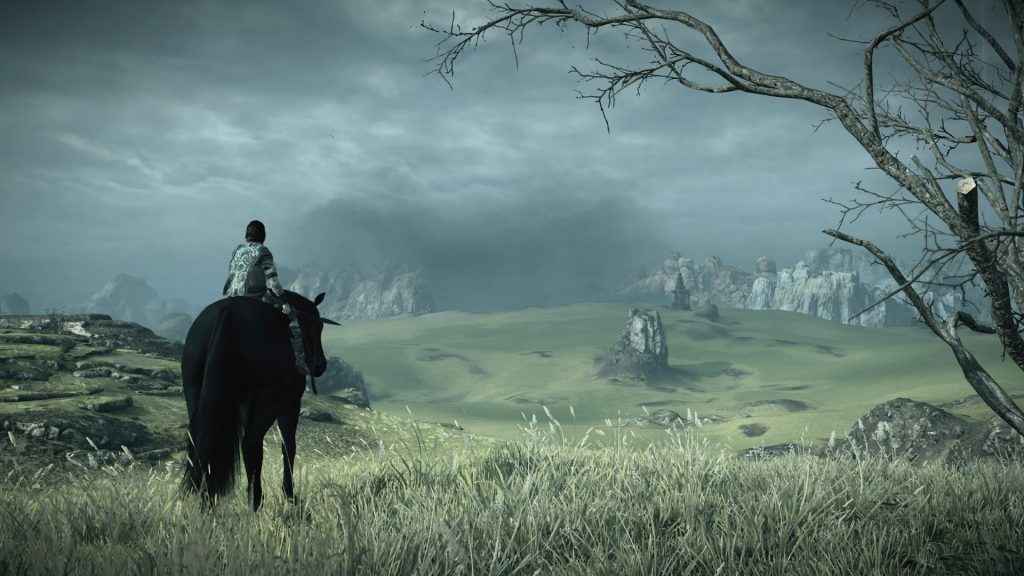
Image via PlayStation Universe
Let’s go back to fast travel.
Shadow of the Colossus (2005) you go horseback riding and literally take your time travelling.
In The Elder Scrolls III: Morrowind (2002), getting around involved learning routes and using the world’s transportation systems. Travel could be part of the challenge. The Elder Scrolls IV: Oblivion (2006) made it easier to return to discovered locations through fast travel.
Neither approach is automatically better. If you’ve already explored an area, walking through it again can feel like a chore. Fast travel lets you spend more time on the parts you enjoy.
But consider Red Dead Redemption 2. Riding across its map can lead to random encounters, interesting characters, and small moments that make the world feel alive. Skip every journey, and you miss out on some of that experience.
This is the trade-off. The more easily we can skip a part of a game, the less time we need to spend on it. Sometimes that makes the game better. Other times, the skipped part was what made the experience memorable.
The same idea applies to instant respawns, skip buttons, quest markers, and automated systems that reduce the time between actions. They can make games more convenient, but they also reflect a design priority: get players to the next meaningful activity without making them wait too long.
That priority makes sense in an industry where players have so many other ways to spend their time.
Games are competing with your phone

Imagine you’re playing a story-heavy RPG. A character is explaining something important, but your phone lights up, leading you to check your phone until suddenly you’ve spent ten minutes scrolling.
When you return to the game, you’ve lost track of the conversation. You don’t know what happened to the plot.
This is not only contained in gaming. A 2015 study by Cary Stothart, Ainsley Mitchum, and Courtney Yehnert found that receiving a phone notification could interrupt your momentum on an attention-demanding task, even when the subjects didn’t interact with the phone.
More recent research has also examined short-form video overuse. A 2025 systematic review and meta-analysis by Lan Nguyen and colleagues covered 71 studies involving 98,299 participants. They concluded that the more you watch short-form videos, the more it is associated with poorer cognitive performance.
Games now compete with that experience. The usual long tutorials, cutscenes, and demos don’t fit that format and therefore are deemed as “boring” by some players now.
Developers have a business reason to make the first few hours engaging. If players quit before reaching the best parts of a game, they may never return. The challenge is getting players interested without making every part of the experience feel like a race to the next reward.
When playing starts to feel like homework
![Guide] Daily Commissions (More rewards?) and Blessing of the Welkin Moon Worth it? Lets calculate! Genshin Impact | HoYoLAB](https://upload-os-bbs.hoyolab.com/upload/2020/10/22/36983558/8e647a06d49b552773f1533bdbc57d4c_4446454497281743502.png)
Image via HoYoLAB
This is especially clear in games that rely on regular updates.
In Fortnite, players can work through battle passes, complete quests, and join limited-time events. Mobile games often use daily rewards and timed challenges to encourage players to return.
These systems can give players something to look forward to. They can also make it feel like there’s always something you need to finish.
You open a game because you want to relax, but first you have to claim your daily reward, finish a few missions, and make progress before an event ends. Instead of deciding what you feel like playing, you start thinking about what you might miss if you don’t log in.
This isn’t just a guess about what developers want. Unity’s 2024 Gaming Report, based on a survey of 300 respondents in 2023, found that 67% of surveyed studios favored daily rewards and missions as engagement tactics. Achievements and challenges came next, at 59%.
Those figures don’t mean most games are designed to manipulate players. They do show that encouraging people to return is an important part of game development.
For games that earn money from ongoing purchases, keeping players engaged can also mean keeping them around long enough to buy cosmetics, battle passes, or other content. That gives developers an incentive to create regular goals and reasons to come back.
The problem isn’t that daily rewards exist. It’s when the pressure to keep up starts getting in the way of simply enjoying the game.
Are we amusing ourselves to death?
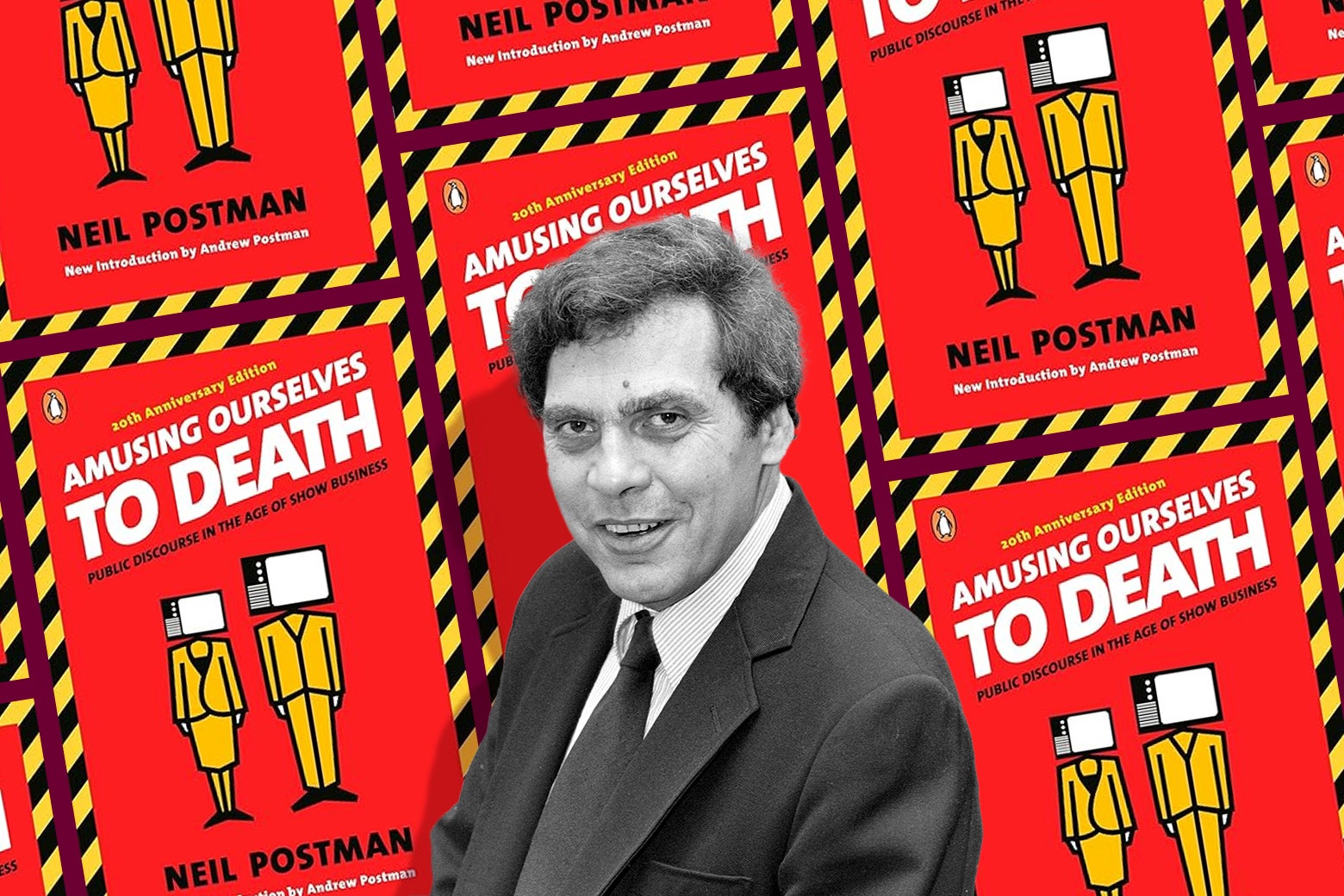
Image via Slate
In 1985, writer Neil Postman published Amusing Ourselves to Death, a book about how television was changing public discussion by turning more subjects into entertainment.
His concern was that when everything has to entertain us, we may become less willing to engage with things that require more time and thought.
Postman wasn’t writing about TikTok or video games, but the idea fits today’s media environment. News is condensed into short clips, long videos are cut into highlights, and social platforms make it easy to leave anything that doesn’t interest us immediately.
Games aren’t separate from this culture. Players may skip dialogue to get back to combat, rush through quests to collect rewards, or abandon a game when its opening feels too slow.
But there’s a difference between wanting a game to respect your time and expecting every moment to be exciting.
Some of the best parts of gaming aren’t exciting in the usual sense. Exploring an unfamiliar place, slowly getting to know a character, or finally understanding a difficult puzzle can be rewarding precisely because they take time.
If we judge every moment by how quickly it gives us something, we might overlook experiences that need room to develop.
Fast games aren’t necessarily bad games

Image via YouTube
There’s a good reason why developers make games more convenient. Many players have jobs, school, families, and other responsibilities. They may only have an hour to play, and they don’t want to spend half of it repeating a journey they’ve already completed.
Fast travel can respect their time. Short matches can fit into a busy schedule. Skip buttons can help players who have already seen a cutscene.
And plenty of modern games still ask players to slow down. Baldur’s Gate 3 has lengthy conversations and complicated decisions. Elden Ring expects players to explore and learn from failure. Red Dead Redemption 2 allows its story and world to unfold at a slower pace.
These games show that players haven’t stopped enjoying experiences that require patience.
The issue isn’t speed itself. It’s whether convenience becomes the only thing developers value, and whether we start seeing every delay as a problem to solve.
So, are games getting too fast?
Maybe modern games aren’t making us impatient. Maybe they’re adapting to a world where our free time is limited and entertainment is always available.
Developers want players to stay. Players want games that respect their time. Social media platforms want us to keep scrolling. All of these things can be true at once.
But there is a trade-off when every journey can be skipped, every failure can be retried immediately, and every session comes with another list of rewards to collect.
Sometimes, convenience makes a game better. Other times, slowing down is part of the experience.
The point isn’t to bring back every frustrating mechanic from older games. It’s to remember that not every minute needs to produce a reward, and not every quiet moment needs to be removed.
When we skip the journey, we get to the destination faster. But sometimes, the journey is what makes the destination worth reaching.
Are games getting better at respecting our time, or are we becoming less willing to spend it?