Did the title intrigued you? Let the gamers nerd out for a bit on this article. Buckle up because you'll be walking away with more in your inventory than your last save point!
In 2018, Iyadurai et al. published a study involving 71 people who had experienced motor vehicle accidents and were admitted to the ER. The researchers, in the midst of the chaos, divided the group into two groups. Group A was tasked to recall what happened and then play Tetris for at least 20 minutes. We can only imagine the look on the doctor's faces seeing the rider's locked in face playing Tetris while getting treated!
However, Group B was tasked to recall the events of the accident and write an activity log recalling the events.
When the results came out, Group A (Tetris group) reported an average of 8.73 intrusive memories during the following week as well as a steady decline in intrusive memories. Meanwhile, Group B reported an average of 23.26–— that is a significant difference if we're talking about intrusive thoughts and how recurring it can get to someone who just experienced something traumatic.
Why Does This Happen? And why Tetris specifically?
One of the most distressing symptoms associated with PTSD is experiencing unwanted memories of a traumatic event. These can appear as vivid images or flashbacks, even when someone doesn't want to think about what happened. Have you ever had an intrusive thought? It's basically like that but in the context of the traumatic events when the person was exposed.
The researchers wanted to see whether a visually demanding activity could interfere with the formation of these memories.
Could Other Games Have the Same Effect as Tetris?
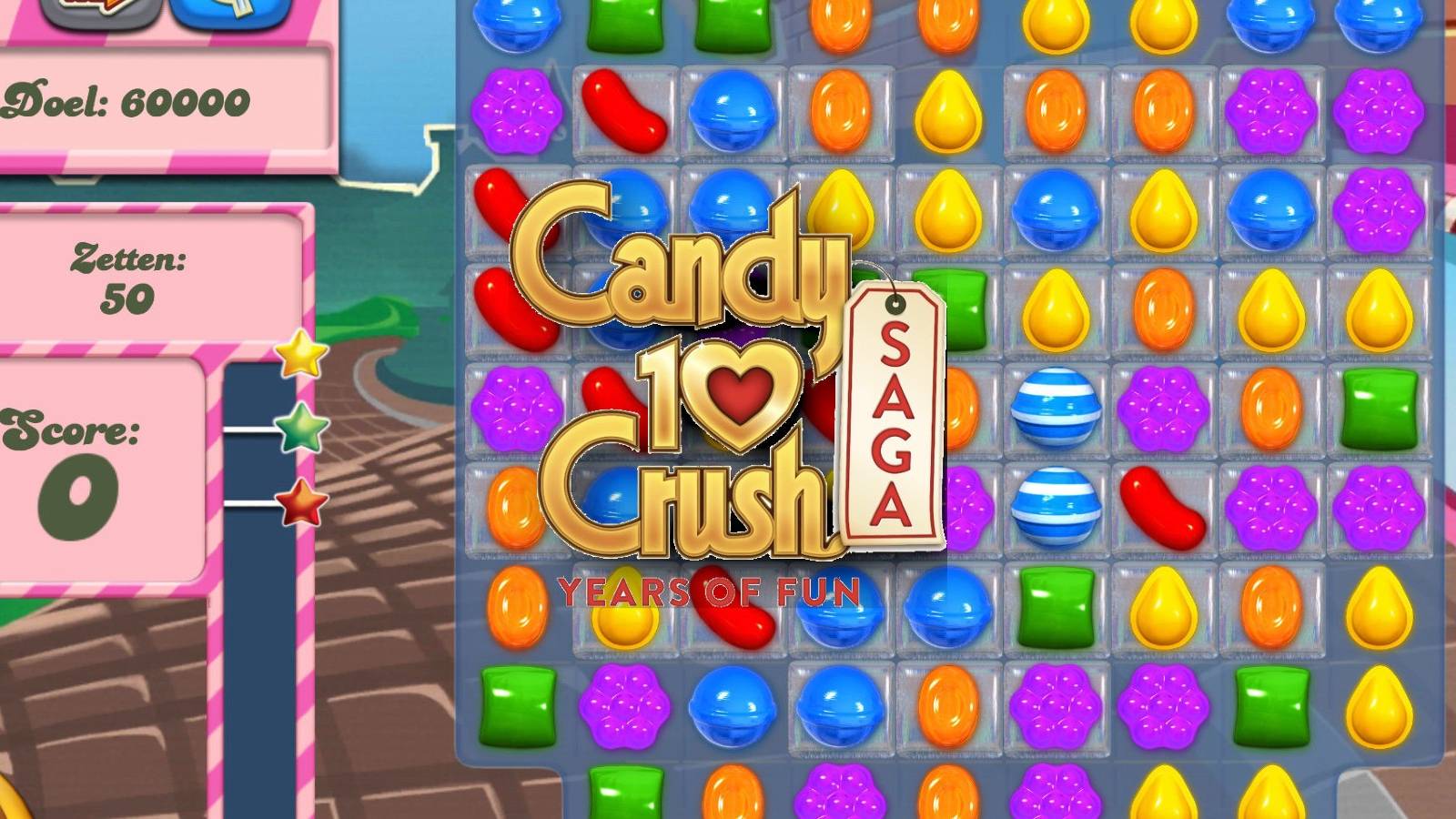
Candy Crush via GameRant
Now here's where things get interesting. If Tetris can help reduce intrusive memories, does that mean other games can do the same? Well, possibly! And no, we're not saying you should start recommending Candy Crush as a replacement for therapy just yet.
The researchers believe that the important factor may not be Tetris itself, but the kind of brain activity needed to play it. Remember how we talked about visuospatial working memory? It's basically your brain's ability to process and temporarily hold visual information, like shapes, positions, and patterns.
Tetris constantly puts this ability to work. You're looking at falling blocks, figuring out where they fit, mentally rotating them, and planning your next move. Researchers believe that other games requiring similar visual and spatial processing may produce a similar effect. In fact, the original 2018 study by Iyadurai and colleagues suggested that activities such as drawing and playing games like Candy Crush could be worth investigating.
So, what makes a game a good candidate?

Zombie Tsunami via Google Play
If we're looking at the kind of gameplay researchers are interested in, there are a few things to consider.
1. It should require visual and spatial thinking.
2. It shouldn't rely too much on reading or dialogue.
3. It should keep you mentally engaged.
4. It shouldn't introduce another distressing experience.
Game Suggestions!

Blockudoku via Google Play
Here are a few examples based on their gameplay mechanics. These are possible candidates for research, not games that have been proven to prevent PTSD.
- Candy Crush
- Blockudoku
- Ominomicon
- Bejeweled
- Mario Kart
Of course, we can't simply put every game into the same category. A first-person shooter, for example, has different demands from a puzzle game. A story-heavy RPG also requires more reading and verbal processing. But that doesn't automatically mean these games are ineffective. They simply haven't been established as suitable interventions through this research.
Researchers Have Already Tested Games Beyond Tetris

Mobilum via National Library of Medicine
And this isn't just a hypothetical question. Researchers have started testing other games and specially designed tasks to see whether the same effect can be achieved. One example is Mobilum, a specially developed visuospatial game tested against Tetris in a 2025 study.
The experiment involved 120 healthy participants who watched a film designed to trigger intrusive memories. Three days later, they were reminded of the film before being assigned to play Mobilum, play Tetris, or complete a control activity. The results were interesting. Participants in the Mobilum group reported approximately 43% fewer intrusive memories than those in the control group. Tetris, meanwhile, did not produce a statistically significant difference in that particular experiment.
This doesn't mean Mobilum is better than Tetris or that it can prevent PTSD. The study used a traumatic film rather than real-life traumatic experiences. Still, it gives researchers another reason to investigate whether specific game mechanics can be used in this type of intervention.
Does Timing Matter?

Remember the original Tetris study? The participants played the game within six hours of experiencing a motor vehicle accident. This is important because the researchers were looking at memory consolidation, the process through which newly formed memories become more stable.
The idea is to introduce the visuospatial activity while the memory is still being processed. However, this doesn't mean there's a strict six-hour deadline for every possible intervention. A 2019 experiment explored another approach involving memory reconsolidation. This time, researchers found that a similar intervention could reduce intrusive memories even when participants played Tetris three days after watching a traumatic film.
The difference was that participants were first reminded of the traumatic material before playing. Researchers were investigating whether recalling a memory could temporarily make it more open to updating, allowing the visuospatial task to interfere with that process.
So, there's more to this than simply opening Tetris whenever an unwanted memory comes to mind. The timing and the way the intervention is administered are important parts of the research.
But Does This Actually Prevent PTSD?

Before we get too excited, let's clear something up. Reducing intrusive memories is not the same as preventing PTSD. PTSD is a complex condition with symptoms that go beyond unwanted memories. It can involve nightmares, avoidance, changes in mood, difficulty sleeping, and constantly feeling unsafe or alert.
The original 2018 Tetris study found a significant reduction in intrusive memories during the following week. However, it did not establish that the intervention prevented PTSD or improved every other symptom associated with trauma.
There are also studies with mixed results. A 2025 experiment involving 94 participants who watched a traumatic film found no statistically significant difference between groups that played Tetris once, played it over several days, or did not play it at all. So while the findings are promising, we're still far from saying that playing a puzzle game after a traumatic experience can prevent someone from developing PTSD.
What Does This Mean for Gaming?

We've spent years discussing how video games affect our attention, behavior, and mental health. But research like this gives us another perspective: game mechanics may also have uses beyond entertainment.
What's particularly interesting is that Tetris doesn't need a complicated story, realistic graphics, or an expensive production budget to be useful in this research. Its value comes from what players actually do while playing.
This also opens up opportunities for developers and researchers to work together on games designed around specific mental activities. Instead of simply creating games for entertainment, they could explore how certain mechanics might support healthcare and rehabilitation.
Of course, there's still a lot of research to be done. These interventions are experimental and shouldn't replace professional trauma care. Still, it's fascinating to think that something as simple as arranging falling blocks could become part of a much bigger conversation about mental health.
Who knew that the game we've been playing to kill time could also help researchers understand how our brains process traumatic memories? And perhaps that's one of the most interesting things about video games. Sometimes, their value goes far beyond what's happening on the screen.
References:
Iyadurai L, Blackwell SE, Meiser-Stedman R, Watson PC, Bonsall MB, Geddes JR, Nobre AC, Holmes EA. Preventing intrusive memories after trauma via a brief intervention involving Tetris computer game play in the emergency department: a proof-of-concept randomized controlled trial. Mol Psychiatry. 2018 Mar;23(3):674-682. doi: 10.1038/mp.2017.23. Epub 2017 Mar 28. PMID: 28348380; PMCID: PMC5822451.
Kessler, H., Schmidt, A. C., James, E. L., Blackwell, S. E., von Rauchhaupt, M., Harren, K., ... & Holmes, E. A. (2020). Visuospatial computer game play after memory reminder delivered three days after a traumatic film reduces the number of intrusive memories of the experimental trauma. Journal of Behavior Therapy and Experimental Psychiatry, 67, 101454.
Matura JM, Kessler H, Holmes EA, Timmesfeld N, Tokic MC, Axmacher N, Blackwell SE, Schmidt AC, Schweer JM, Hippert C, Apel L, Dieris-Hirche J, Herpertz S, Kehyayan A. Comparing a new visuospatial intervention administered 3 days after a trauma film to reduce the occurrence of intrusive visual memories: a single-center randomized, controlled trial in healthy participants. Front Psychol. 2025 Jan 10;15:1454086. doi: 10.3389/fpsyg.2024.1454086. PMID: 39868021; PMCID: PMC11759303.
Allahim MA, Alsallal SA, Almohaimeed IA, Alfouzan AA, Alrashed AS, Abualjamal RY, Alharbi MF and Alqifari AN (2026) Visuospatial imagery-competing task interventions for reducing intrusive memories following real-world trauma: a systematic review and meta-analysis. Front. Psychiatry 17:1925949. doi: 10.3389/fpsyt.2026.1925949