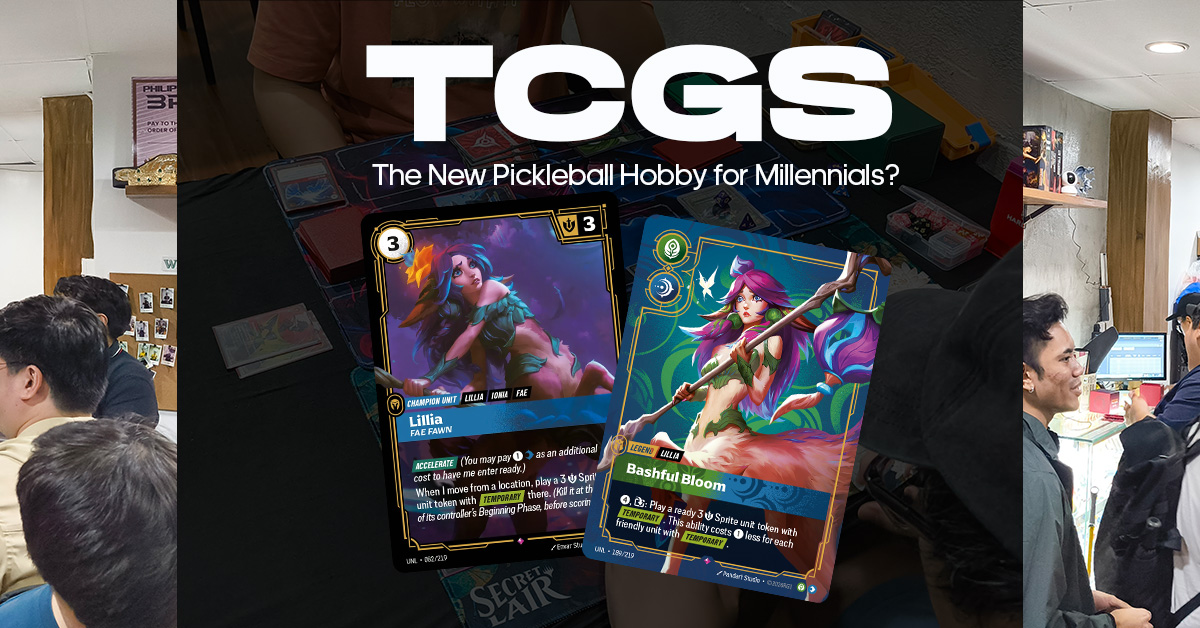
There’s a particular kind of hobby that seems to appear once you reach adulthood. It has to be easy enough to pick up without embarrassing yourself, competitive enough to keep things interesting, social enough to get you out of the house, and structured enough that you can actually make friends through it.
 Pickleball image via Kollective
For a while, pickleball seemed to have cracked the code. It was everywhere. People who hadn’t touched a racket in years were suddenly booking courts after work, buying paddles, and talking about their favorite places to play. It was easy to understand, easy to learn, and—perhaps most importantly—gave adults an excuse to regularly hang out with other adults.
Now, there is a suspiciously similar hobby sitting in card shops.
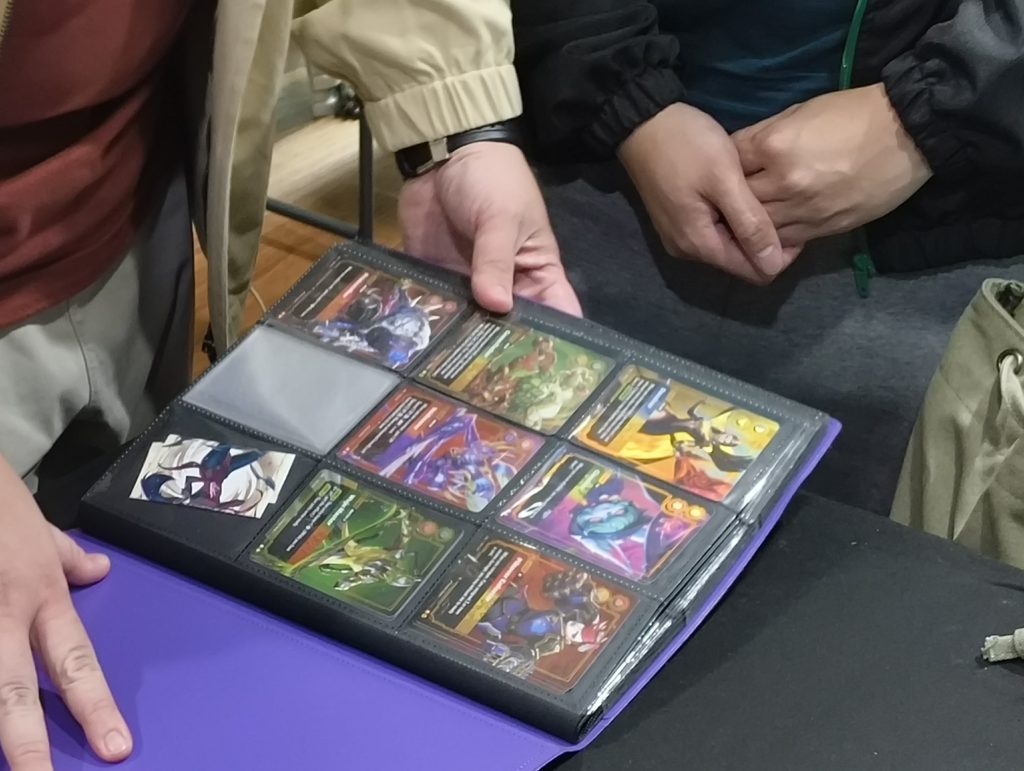 Riftbound card binder
Trading card games have always existed, but they’re increasingly becoming more than something you collect in binders or play with your childhood friends. There are weekly events, local communities, competitive circuits, dedicated stores, and players who will happily spend an entire evening arguing about cardboard. So, naturally, there’s only one question to ask:
Are TCGs the new pickleball?
 Castronaut’s Pokémon binder
The Problem With Being an Adult
The hardest part of getting into a new hobby isn’t always learning the hobby. Sometimes, it’s finding somewhere to belong. When you’re younger, socializing happens almost automatically. School gives you classmates. University gives you orgs. Gaming gives you friends online. Then adulthood arrives and suddenly everyone has work tomorrow. That’s what makes hobbies like pickleball so appealing. You don’t necessarily need to know the people you’re playing with beforehand. You just need to show up. TCGs can work the same way.
Walk into a local game store on the right night and there are already people waiting to play. You don’t need to organize the entire group yourself. The hobby has already done that part for you.
And Riftbound: League of Legends Trading Card Game might be one of the clearest examples of how this works for gamers.
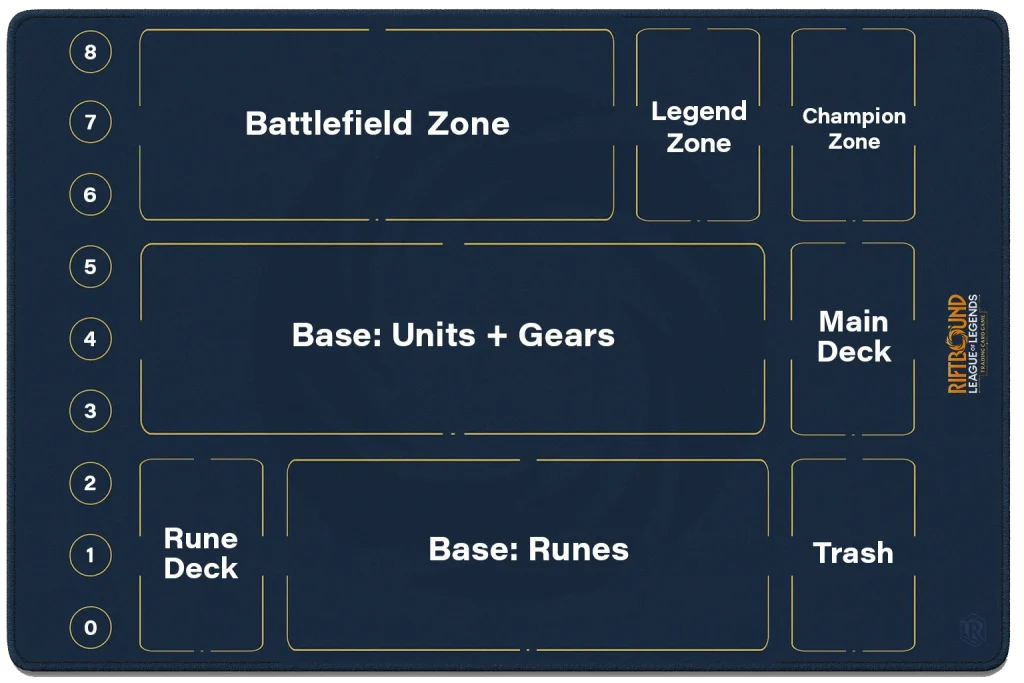 Riftbound zones playmat
Your First Deck Is Basically Your First Paddle
Riftbound is Riot Games’ League of Legends trading card game, set in the world of Runeterra. Instead of simply reducing an opponent’s health to zero, players fight over battlefields and score points by controlling them, with the first player to reach eight points winning the game.
That makes it recognizable enough for anyone who’s played a TCG while giving it its own identity. It also has a rather convenient gateway for gamers: you might already know the characters. You don’t have to memorize an entire fantasy universe before understanding why you might want to build a deck around Lillia, Lux, Fiora, or whichever champion you already happen to like.
But knowing the characters isn’t enough to make someone actually sit down and play. Eventually, you have to take the terrifying step of being bad at something in public.
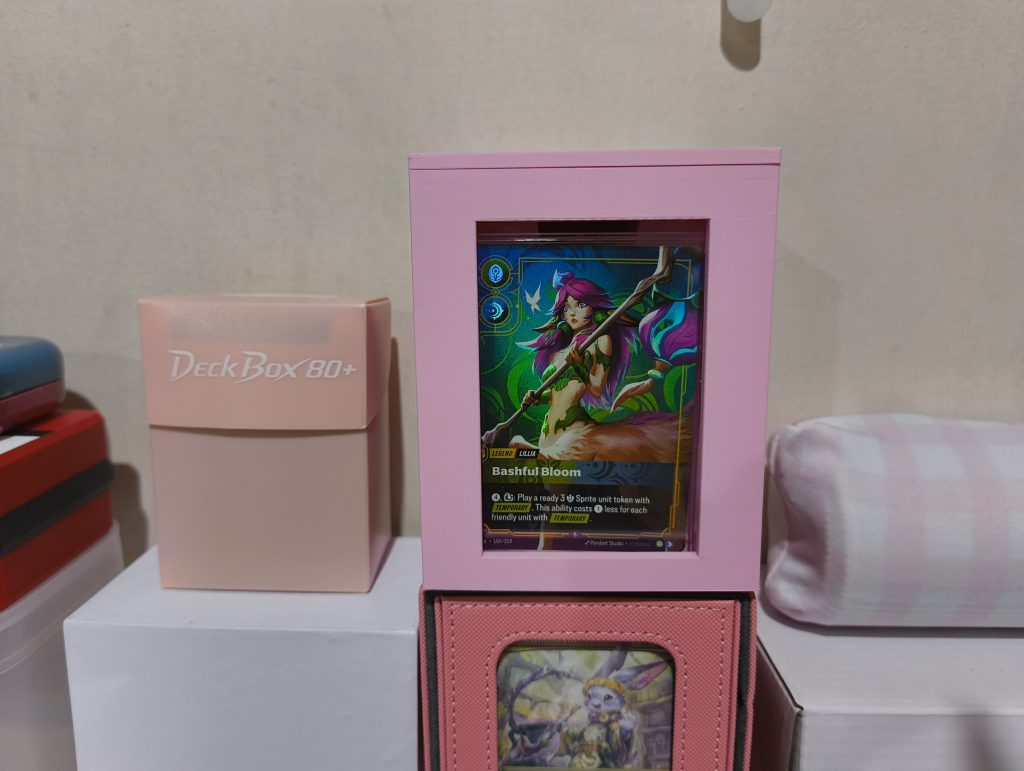 Castronaut’s actual Lillia deck
The Most Intimidating Part Is Walking Into the Shop
Our own introduction to Riftbound started with the slightly terrifying experience of going to a card shop alone.
At HobbyT in BF Homes, Parañaque, Nexus Night was already underway. Players knew each other. Some were experienced. Others were competing seriously. Meanwhile, a newcomer was standing there trying to figure out where exactly they were supposed to fit in.
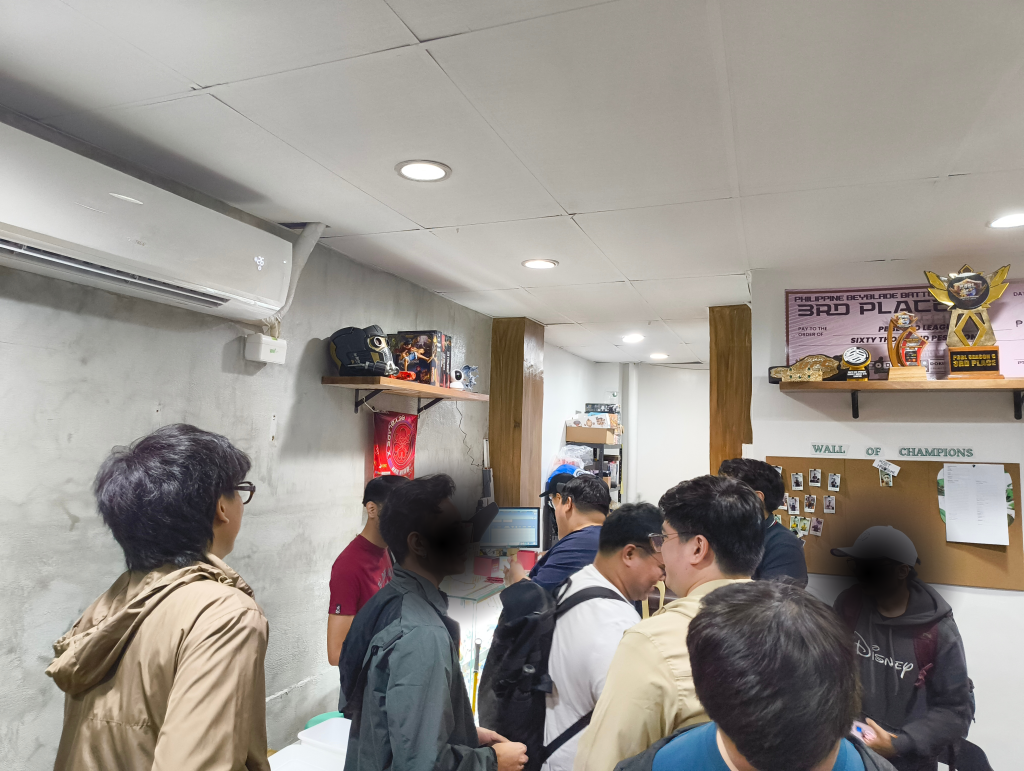 Players during HobbyT’s Riftbound Fridays Nexus Nights on August 28 via HobbyT
Then the cards came out. The first opponent, Miguel, knew immediately that this was a first game and helped make the experience comfortable. Afterward, the conversation naturally moved from the match to the community itself. HobbyT’s Riftbound players included beginners, casual players, and competitive players who were willing to help newer players figure out their decks. That’s when Miguel made an unexpectedly good comparison.
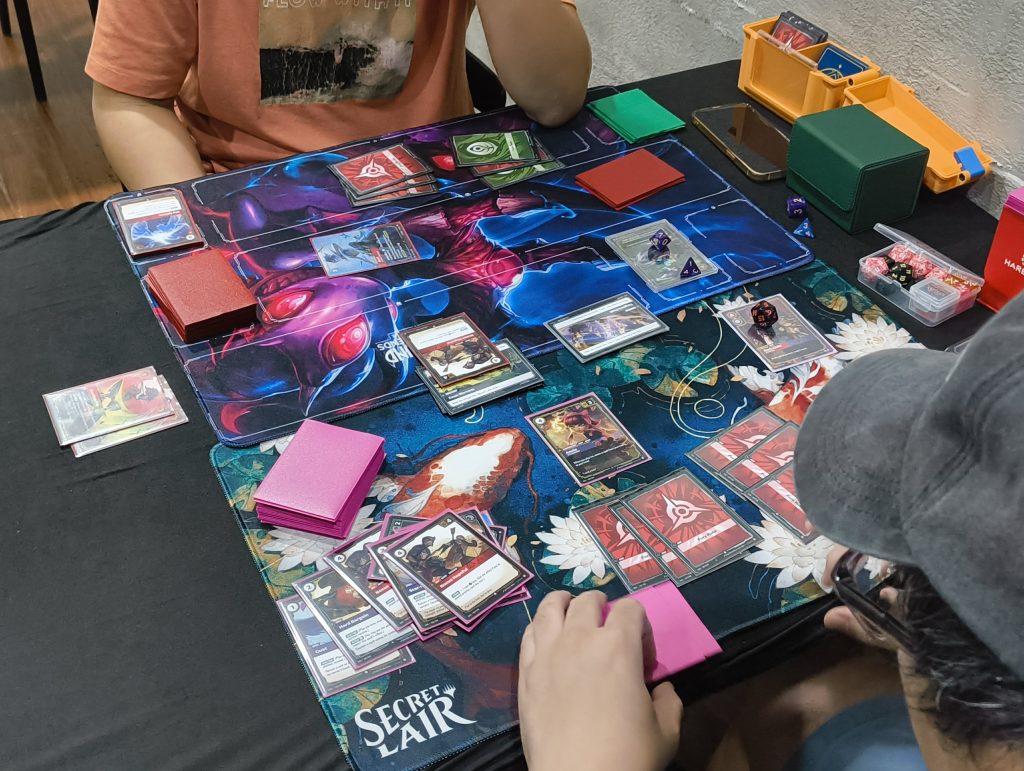
“It’s like Pickleball, it’s easy to understand and easy to get into, and especially it’s a big IP, many would already be familiar with the champions.”
Maybe he’s onto something. Because once you strip away the paddles, the cards, and the extremely different physical activities, the underlying appeal starts looking familiar. Attendees arrive. Play along. You meet people. You get better. Then you come back next week.
Of Course, Then You Get Addicted
The first deck doesn’t necessarily stick. Our first attempt was a Fiora starter deck. It was perfectly fine, but the playstyle wasn’t quite right. Fiora revolves around powerful units and building enough Might to generate resources, and while the deck worked, it didn’t quite scratch the right part of the brain. Then came Lillia.
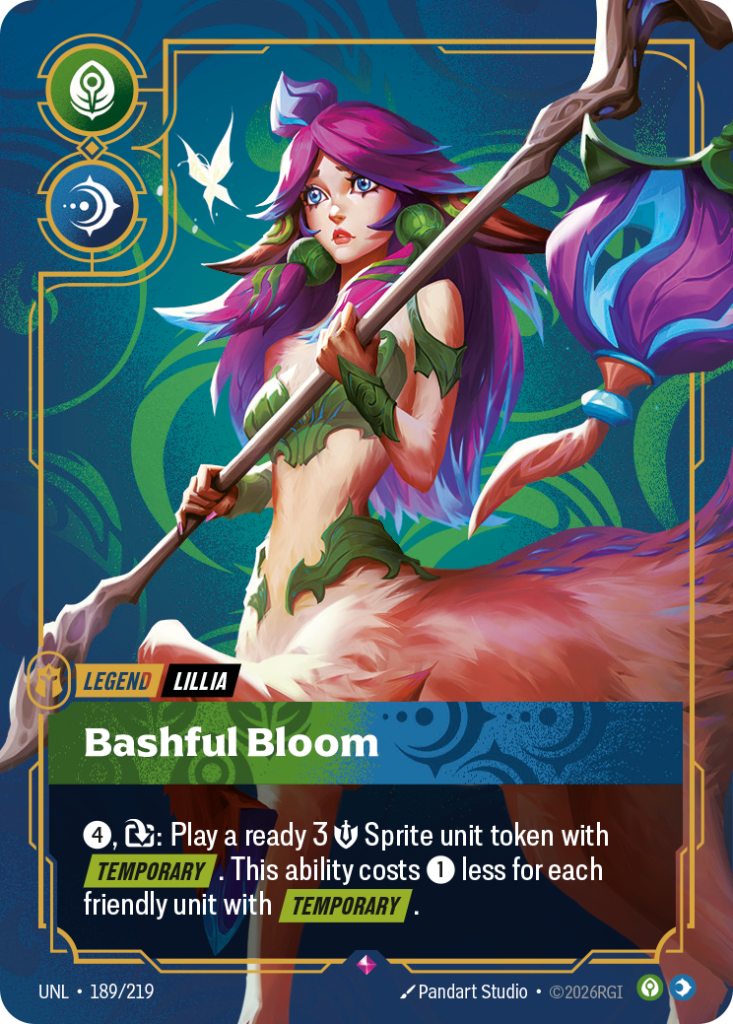 Lillia Riftbound card via Riftbound
The deck revolves around generating Sprites and constantly applying pressure across the battlefield. Suddenly, the game made sense in a completely different way. This is another thing TCGs have over a lot of casual hobbies: there is a ridiculous amount of room to figure out what kind of player you are. Adopt an aggressive playstyle. Players can play defensively. You can obsess over efficiency. You can build around a favorite character even if it’s probably not the smartest competitive decision.
Eventually, your deck starts feeling less like a collection of cards and more like your personality expressed through cardboard. Naturally, this is also where your wallet begins to suffer.
Building the physical Lillia deck meant buying the cards, sleeves, and accessories needed to actually bring it to the table. The deck came together with help from VGZZ Hobby Station, turning something that had started as an online experiment into an actual hobby you could carry around in a deck box. And once you own the deck, you have a new problem. You need somewhere to use it.
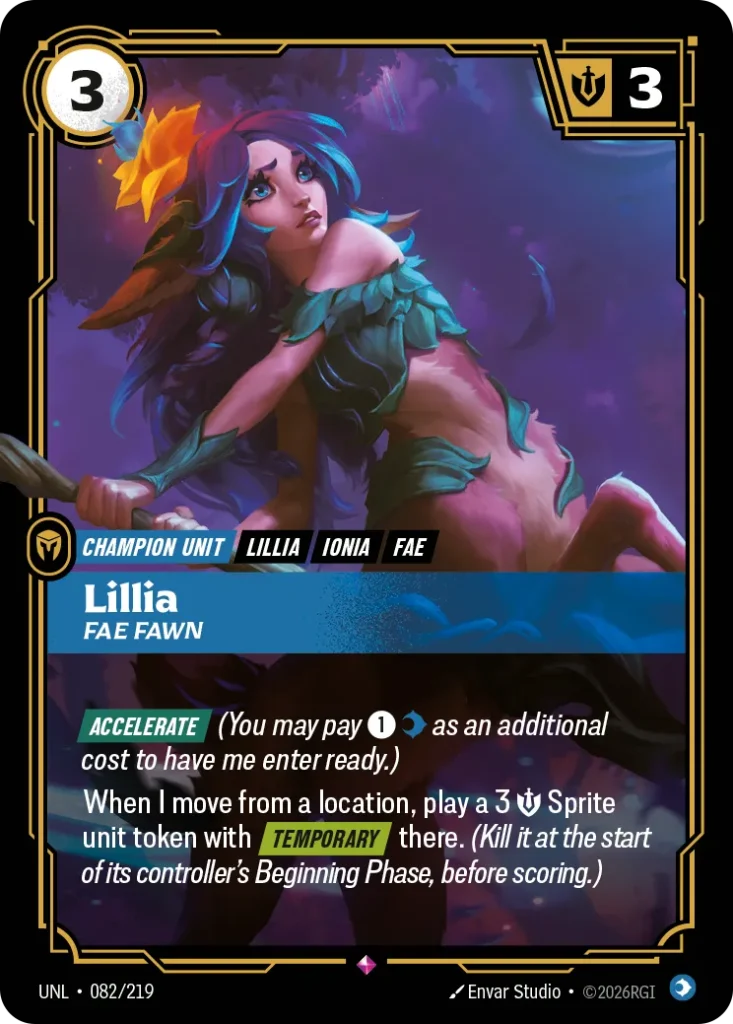 Lillia Riftbound card via Riftbound
The Card Shop Is the Court
This is where the comparison gets interesting. Pickleball needs a court. TCGs need a card shop. Both become more valuable when they aren’t simply places to perform the activity, but places where a community forms around it.
At HobbyT, competitive players could sit beside people who had only recently learned the game. You could lose horribly, watch someone else’s match, ask questions, and come back for another round. And yes, sometimes you will still get absolutely demolished. The difference is that somebody will probably explain why. That community element is important enough that even experienced players notice it.
We spoke with Jay Fangs, a house player at HobbyT and a competitive TCG player who also plays Magic: The Gathering and One Piece. Interestingly, League of Legends wasn’t even what brought him to Riftbound. He hadn’t played League before. He simply wanted to try a new card game. When asked what makes Riftbound stand out from the other TCGs he’s played, Jay pointed toward its battlefield system and resource mechanics, describing it as something of a hybrid between Magic and One Piece.
And when it came to the local scene, his answer was even simpler.
“The community is very friendly! Super welcoming sila to new players, so bumabalik sila kada Nexus Night or basta may laro.”
That’s probably the part that gets lost when we talk about TCGs as a product. The cards are the thing you buy. The community is the thing that keeps you coming back.
So, Are TCGs Actually the New Pickleball?
Probably not in the literal sense. Nobody needs to start putting a pickleball racket in a museum because someone bought a Riftbound starter deck. But the comparison reveals something interesting about both hobbies. They’re approachable enough for newcomers, deep enough for people who want to take them seriously, and—most importantly—they give adults a structured reason to spend time with other people. That’s a surprisingly valuable thing.
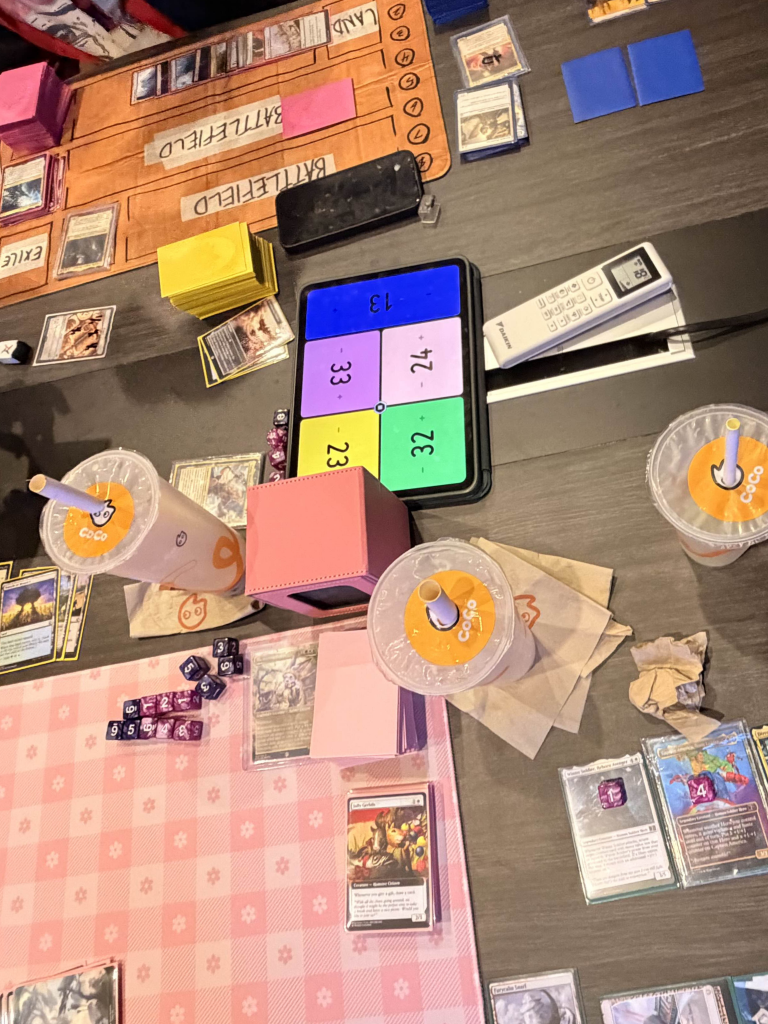 Magic: The Gathering session at Gaming Pinas via Google Maps
Maybe the future of gaming isn’t always about finding the next giant digital world to disappear into. Sometimes it’s finding a table, sitting across from another person, and spending two hours trying to outsmart them with a pile of cards. And if you’re already a gamer, you have a head start. The concept of grinding is understood. Grasping how builds work comes naturally to players. You understand getting irrationally attached to a fictional character. You understand spending far too much money on something because you have decided it is now your thing.
The only real difference is that this time, your opponent is sitting across the table. And judging by the people already showing up every week, they’re probably waiting for you.
Read More PGDX 2026 Content Here:
- PGDX 2026 Launches Official Steam Curator Sale
- PGDX 2026 Celebrates Cosplay Community
- Experience the Best of Gaming at PGDX 2026
- PGDX Launches HATCH for Filipino Game Developers
Read More Think Pieces Here:



2 Comments