


The Philippine gaming community has spent the past few weeks watching a familiar story unfold: a creator posts a callout, screenshots follow, the company responds, more people start talking, and suddenly everyone is asking the same question: how did it get this bad?
This particular can of worms opened with Tier One Entertainment.
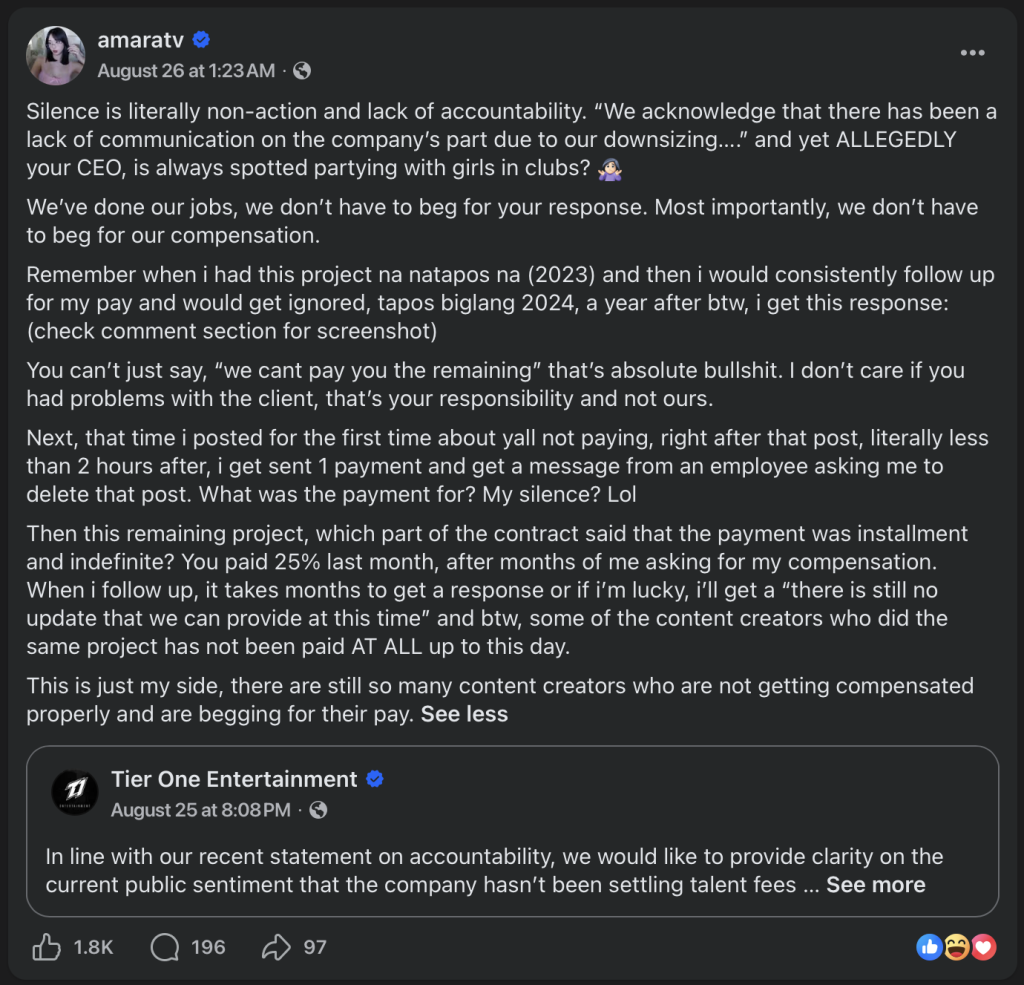

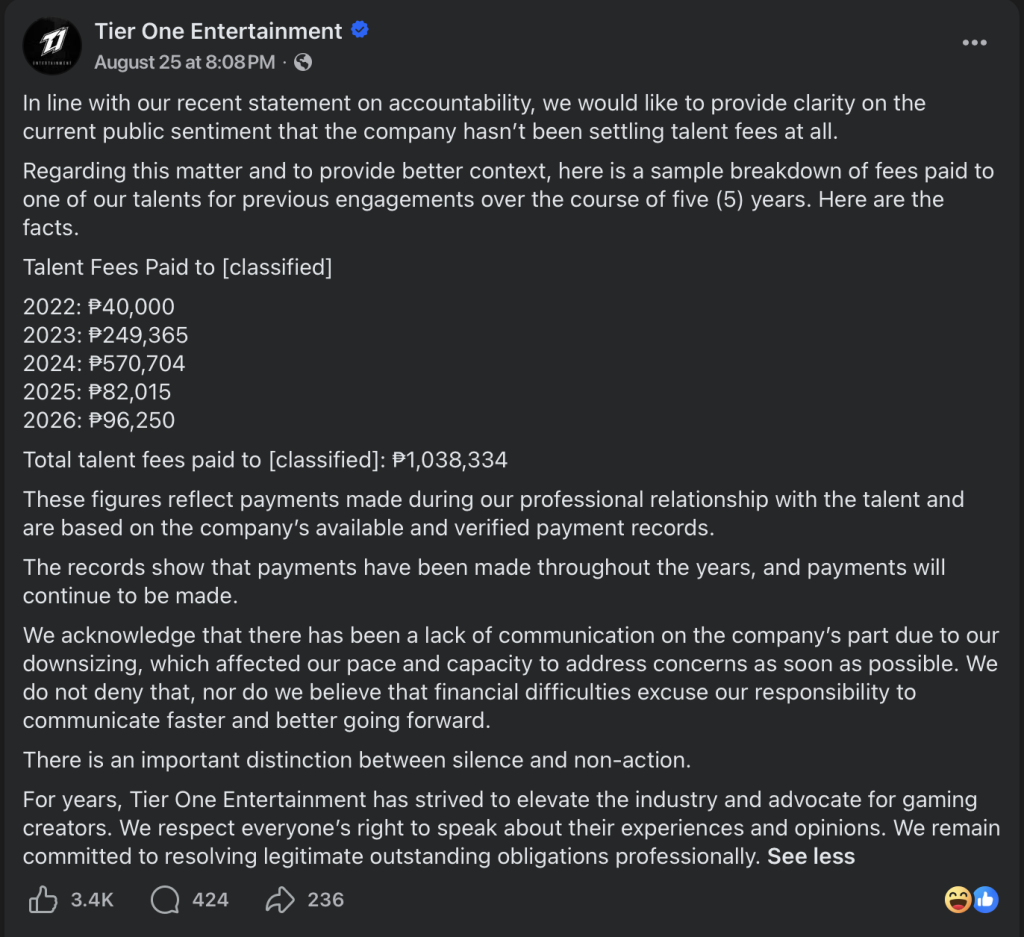
Amara Ui publicly called out the esports agency again over delayed project payments, nine months after making a similar complaint. Other creators have since shared their own experiences. Chacha Pega announced in October 2025 that she had been pursuing payment for nearly a year.
The screenshots make for compelling internet drama, but there is a more complicated business problem underneath them. The people who completed the work want brands to pay them, while the agency may wait for settlements.


That doesn’t make an unpaid creator’s frustration any less legitimate. It does, however, change the question. Why is collecting payment so difficult in the first place?
Gaming Didn’t Invent the Late Invoice
Esports organizations and gaming agencies may deal in tournaments, creators and sponsorships instead of construction projects or office supplies, but the business mechanics underneath are familiar. A brand commissions an agency. The agency coordinates the campaign and hires the necessary talent. Agency personnel deliver the work. The agency bills the client, and then pays out the money to everyone who worked on the project.
The problem is that “eventually” can be a very long time.

The Philippine advertising industry’s own trade-practice guidelines have also historically recognized this chain: agencies collect from advertisers and then pass payments down to media suppliers and other service providers. The longer the client takes to pay, the more pressure travels down that chain.
Thus, when a gaming talent says they have yet to receive payment, a whole financial pipeline exists behind that sentence.
The Agency Can Be Waiting, Too
This is where the Tier One controversy becomes particularly instructive.
Amara publicly shared the contract and correspondence that linked the remaining 50% of her talent fee to the client’s payment. When the client did not settle its obligation, Tier One told her it could only provide half of the fee and that the remaining half would not be paid. Tier One also described the partial payment as an arrangement made despite its collection issues.


That doesn’t erase the fact that Amara did the work. From her perspective, the agreement was completed and she is still waiting for money she earned. After months of follow-ups, frustration is understandable.
The agency waits for the brand. The talent waits for the agency. The agency’s finance team follows up with the brand. The talent follows up with the agency. Eventually, someone gets tired of following up and posts about it publicly. That is when a private accounts-receivable problem becomes a gaming controversy.
Why Does Gaming Get So Loud About It?
Part of the answer is that gaming is unusually public. If a supplier hasn’t been paid by a company, you probably won’t hear about it unless the supplier has tens or hundreds of thousands of followers who are also emotionally invested in their work.
Gaming creators do.


When Chacha Pega says she has been waiting almost a year, her followers see it. When Amara posts a screenshot of an email, her audience sees it. The frustration that might normally stay buried in an accounts-payable department suddenly becomes public knowledge.
And gaming audiences care deeply about the people involved.
That’s both the blessing and the curse of working in this industry. The same community that makes a creator commercially valuable is also the community that will rally around them when they feel they’ve been treated unfairly.


It creates an understandable feedback loop: the longer someone waits, the louder the eventual complaint becomes. That doesn’t necessarily mean gaming has more unpaid invoices than every other industry. It means gaming has a particularly effective megaphone.
This Problem Is Bigger Than Tier One
That’s why it would be too easy to make this entire story about whether Tier One is the villain.
Tier One did make a mistake whether it’d be from mismanagement, lack of communication or difficulty in collecting, however, it never should have fallen on the creators to do work and not get paid.
Whether that response is satisfactory to the affected talents is another question. Because in their eyes, talk is cheap and rent is due.


But the underlying problem predates Tier One and will almost certainly outlive it.
People working in esports, content creation, advertising, production and other creative industries have been dealing with late payments for years. Recent research and industry reporting continue to show just how widespread the problem is: one 2026 analysis reported that 85% of freelancers surveyed experienced late payment at least some of the time, while advertising agencies themselves reported widespread delays in receiving client payments.
The names change. The industry changes. The invoice remains in the inbox.
The Real Enemy Is the Collection Culture
Maybe the problem isn’t that gaming companies suddenly decide they don’t want to pay people.
Maybe it’s that getting anyone to pay on time is simply difficult in the Philippines, and gaming happens to be one of the industries where that frustration is visible enough for everyone to watch.
That doesn’t mean companies should get a free pass.
A talent shouldn’t have to spend months asking for updates without knowing whether their invoice has been approved, whether the client has paid, or when they can reasonably expect their money. Transparency matters precisely because waiting is much easier to tolerate when you actually know what you’re waiting for.
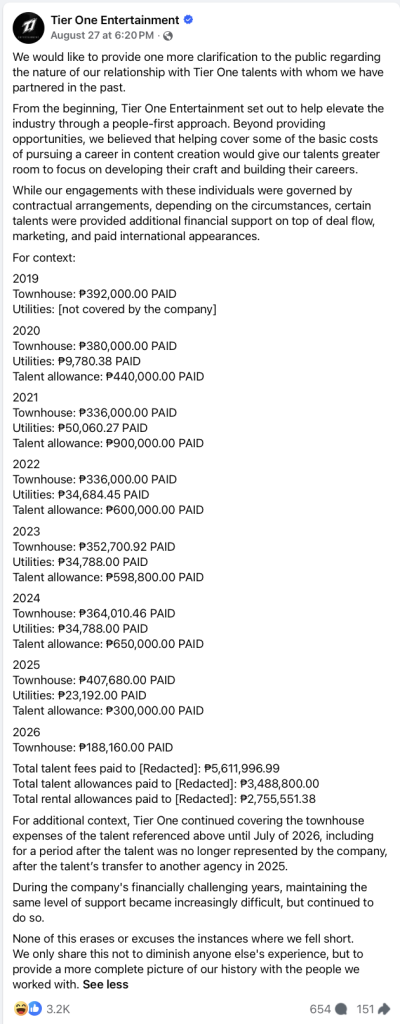

And agencies have a responsibility, too. A client with a history of late payments should have that risk weighed before the campaign starts. If a contract makes talent payment dependent on client collection, everyone involved should understand that before the work starts. If a payment is delayed, communication cannot simply disappear.
Interestingly, this is exactly the direction some agencies in the broader advertising industry are already taking. MARKETECH APAC reported that agencies are tightening collection systems, following up on overdue invoices earlier, screening clients for payment history and using phased billing to reduce the amount of money they have to front.
None of that is glamorous. But neither is chasing an invoice for two years.
The final boss is boring
Perhaps that’s what the Philippine gaming industry actually needs next. Avoid declaring that esports is the future. Not another glossy campaign about turning gaming into a career. Not another enormous tournament that proves how big the audience has become.
The next level of professionalism might look incredibly boring.
A creator finishes a project. The invoice goes through. Finance knows when the money is coming. If something goes wrong, somebody explains what happened and when it will be fixed. The creator doesn’t have to spend months following up, and certainly doesn’t have to turn to thousands of strangers on Facebook just to get someone’s attention. That isn’t a revolutionary idea. It’s just how a mature business is supposed to work. And maybe that’s the hopeful part of all this.

The people making noise now aren’t arguing that gaming should disappear. Quite the opposite. They’re insisting that the industry they helped build should become good enough to support the people inside it. Gaming in the Philippines has already proven that it can fill arenas, build audiences, attract brands and create stars. Now comes the less glamorous boss fight.
Make sure the people who built all of that can afford to keep showing up. Because when the lights go down after the tournament, the crowd goes home, and the stream ends, someone still has to open their inbox. The best ending to this story isn’t another viral callout. It’s an ordinary notification:
Payment received.
Read More PGDX 2026 Content Here:
- PGDX 2026 Launches Official Steam Curator Sale
- PGDX 2026 Celebrates Cosplay Community
- Experience the Best of Gaming at PGDX 2026
- PGDX Launches HATCH for Filipino Game Developers
Read More Think Pieces Here: